
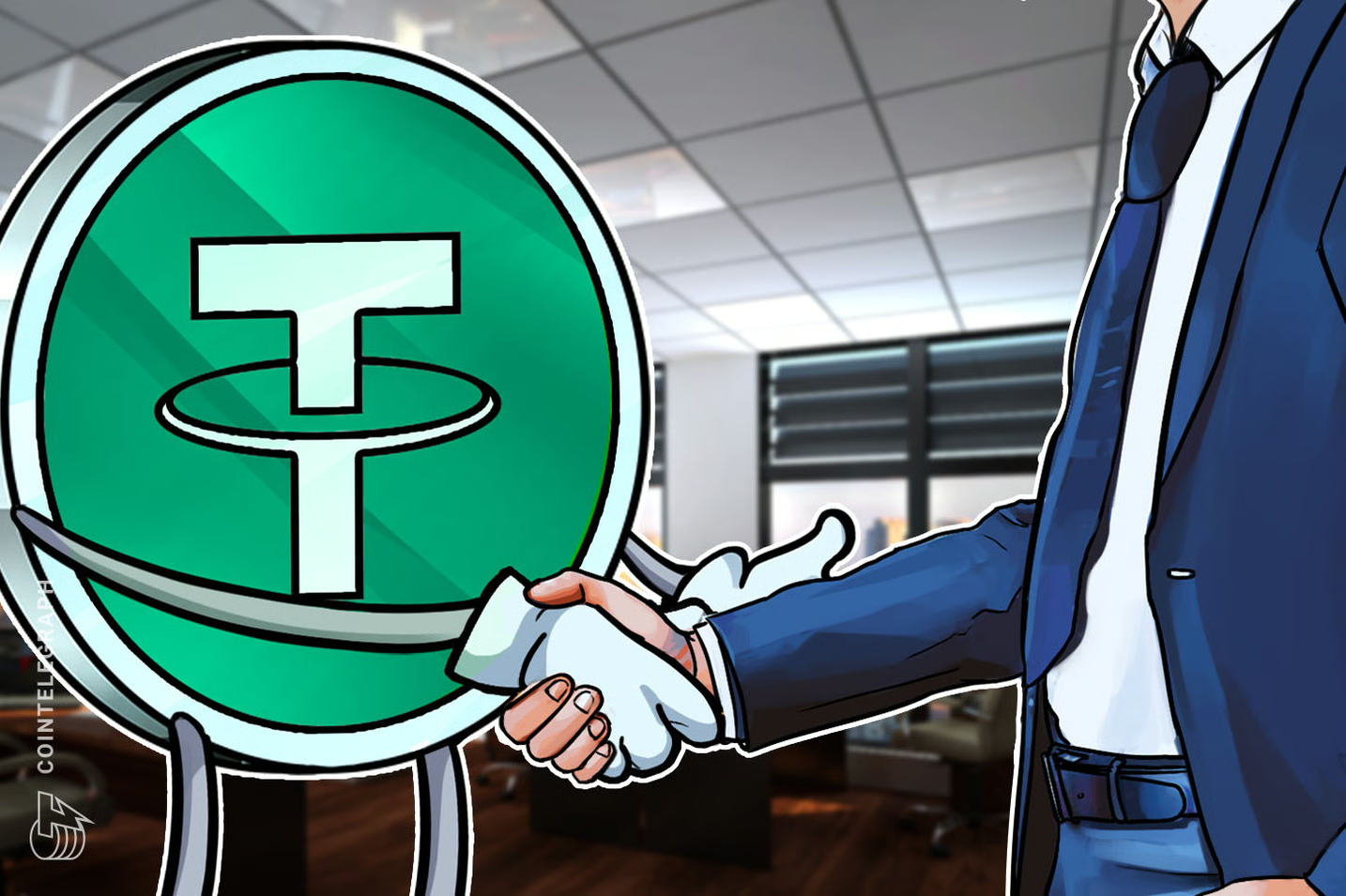
What is Tether (USDT)?
Tether (USDT) is a so-called stablecoin, i.e. a type of cryptocurrency whose value is pegged to real assets – in this case, the US dollar. Unlike many other cryptocurrencies known for their large fluctuations in price, Tether is designed to maintain a stable value, approximately one USDT for one USD. It is this stability that makes it an attractive choice for investors who want to avoid market volatility but still participate in the world of cryptocurrencies. Tether has become a crucial tool for trading on exchanges and storing value, and since its inception in 2014, when it started under the name “Realcoin”, it has significantly contributed to the popularization of stablecoins and the digitization of fiat currencies.

Source: cointelegraph
How does Tether maintain a $1 value?
Tether (USDT) maintains its value through a pegging system. peg) with the US dollar at a 1:1 ratio, which means that for each USDT token issued, there should be a corresponding value in reserves. These reserves include cash, cash equivalents, and other financial instruments, and their purpose is to ensure that each token can be exchanged for real money. Tether Limited issues new tokens when it receives the corresponding deposits in fiat currency and, in cooperation with partners, allows them to be redeemed at the same ratio.
Thanks to this structure, USDT does not behave like a traditional cryptocurrency that can rise or fall sharply in value, but serves as a tool for liquidity and protection against market volatility. Nevertheless, Tether has faced criticism over the years for the alleged lack of transparency of its reserves, which has raised doubts about whether all USDT tokens are fully backed by real funds at all times. Despite this, Tether remains one of the most widely used and widely used stablecoins on the market.

Source: cointelegraph
The Technology Behind Tether: How Does It Work?
Tether (USDT) does not own its own blockchain, but acts as a so-called second-level token that uses existing blockchain networks to process transactions. It was initially released on the Bitcoin network via the Omni Layer protocol, but today it is available on multiple popular blockchains such as Ethereum, Tron, Algorand , and others. This multi-network support allows USDT to be widely deployed and easily accessible within different crypto ecosystems.
One of the key advantages of Tether is its liquidity – it allows users to quickly swap between different cryptocurrencies without having to convert to fiat currencies like dollars or euros. Additionally, USDT can be used for international payments, bypassing complex exchange rates and costly international money transfers.
Tether also emphasizes transparency through the so-called proof-of-reserves system, which claims that all units issued are fully covered by reserves. Despite this, the company continues to face criticism for its lack of independent and comprehensive audits of its finances.

Source: cointelegraph
Tether and other stablecoins
In addition to Tether (USDT), the most well-known stablecoins include USD Coin (USDC), Dai (DAI), and Binance USD (BUSD). While they all share the same basic purpose – maintaining a stable value pegged to the US dollar – they differ in their technical solutions, level of transparency and focus on regulatory compliance.
Tether had the advantage of being the first stablecoin on the market and is now the most widely used globally, but USDC, DAI, and BUSD are gaining popularity, especially among institutions looking for greater transparency and regulatory reliability. USDC and BUSD, for example, are known for their regular audits and cooperation with regulated financial institutions, while Tether has often been criticized for not having a clear enough view of its reserves.
On the technical side, USDT and USDC lead the way in multichain support, allowing for use on networks like Ethereum, Solana, and Avalanche. BUSD is limited to Ethereum and BNB Smart Chain, while DAI, as a decentralized stablecoin, functions through smart contracts without a centralized issuer.
For end users, the ease of withdrawing funds is also important. USDC and BUSD offer lower minimum withdrawal amounts and lower fees, while Tether often asks for higher amounts and additional costs, making it less convenient for smaller transactions.

Source: cointelegraph
The use of Tether in the crypto world
Tether (USDT) is not only a stablecoin digital currency, but also a versatile tool that connects traditional finance with blockchain technology. Its application in the crypto world is diverse and ubiquitous.
One of the most common uses is volatility hedging – when the market becomes volatile, many investors convert their Bitcoin or Ether to USDT to preserve value without exiting the crypto ecosystem. Additionally, international payments through USDT are becoming increasingly popular due to its speed, low fees, and avoidance of intermediaries, making it a convenient solution for global business.
USDT also plays an important role in decentralized finance (DeFi), where it is used to lend, invest, and generate yields through yield farming. Its stability makes it ideal for such protocols.
On crypto exchanges, Tether is often used as a currency that facilitates trading and portfolio diversification – it is present in a large number of basic trading pairs. Also, more and more crypto companies are using USDT for payments and settlements, as it allows for fast and reliable transactions without the currency fluctuations that are common with other cryptocurrencies.

Source: cointelegraph
How to Buy, Use, and Store Tether (USDT)?
The good news is that buying and selling USDT is easier than ever today – it’s also available on our Kriptomats, where you can buy it quickly and securely.
Additionally, you can also buy USDT through online crypto exchanges such as Binance, Coinbase, or Kraken. You need to open an account, verify your identity, and deposit funds (via bank transfer, card, or other cryptocurrency), and then exchange them for USDT. More experienced users can also use decentralized exchanges like Uniswap or PancakeSwap, although these are less suitable for beginners as they require prior ownership of the cryptocurrency and coverage of transaction costs (gas fees).
After purchase, it is important to store USDT safely . Many stay on exchanges that offer so-called hot wallets, but a safer option is a personal wallet where you manage your own private keys. Hot wallets like MetaMask or Trust Wallet offer ease of use, but they are constantly connected to the internet, making them more vulnerable to attacks. For long-term security, cold wallets (e.g. Ledger or Trezor) are recommended, which are completely offline and provide maximum control over your assets.
To use USDT safely, always check your wallet address before sending funds and never share private keys. Also, avoid dubious apps and websites that could be attempts to steal data.

Source: cointelegraph
The Risks and Controversies of Tether
While Tether (USDT) is crucial to the functioning of the crypto market, it has found itself at the center of numerous controversies and investigations over the years, especially regarding its stability and transparency.
One of the main concerns relates to the question of whether each USDT token is actually covered in a 1:1 ratio with US dollars or equivalent assets. According to an investigation by the New York Attorney General’s Office, it was discovered that Tether’s reserves are not only made up of cash, but also various financial instruments, loans, and investments related to their sister company Bitfinex. Although Tether has over time begun releasing data that the reserves include US bonds, Bitcoin and other assets, the lack of a full and independent audit continues to raise doubts about the credibility of this data.
In addition, there are also suspicions of market manipulation. Since Tether uses Bitcoin as collateral in part, many wonder if the issuance of new USDT tokens can artificially increase the price of Bitcoin. Critics even warn that such a structure could be compared to a Ponzi scheme, especially in the conditions of a falling market, when a drop in the price of Bitcoin could threaten the stability of Tether’s reserves and increase the risk of insolvency.
Finally, despite disclosures about reserves and collaborations with companies like Cantor Fitzgerald, many experts warn that disclosures about reserves do not meet financial audit standards. While Tether continues to play a key role in the cryptocurrency world, the issue of trust and transparency remains open.

Source: cointelegraph
The Future of Tether
The future of Tether (USDT) will depend on its ability to adapt to increasingly stringent regulatory frameworks – both in Europe and globally. Full compliance with regulations such as MiCA (Markets in Crypto-Assets) will be key to maintaining the user’s trust and its leading position in the market.
In Europe, the MiCA regulation, which went into effect on December 30, 2024, sets strict requirements for transparency and security, which creates uncertainty about whether USDT meets all the new criteria. As a consequence, some exchanges such as Coinbase and Crypto.com have already removed USDT from offering for the European market, while others, such as Binance, are still taking a wait-and-see strategy.
On the other side of the Atlantic, the United States is showing signs of a more favorable attitude towards crypto, especially with political support from the top. But legislative proposals like the Payment Stablecoin Act impose requirements for full back-up coverage, regular audits , and greater transparency, which could pose a challenge for issuers like Tether – especially if these regulations start to apply to offshore companies as well.
If Tether were to experience more serious difficulties or loss of market confidence, the consequences could be significant for the entire crypto ecosystem. Since USDT is a crucial source of liquidity and a bridge between fiat currencies and digital assets, its stumbling could trigger a wave of sell-offs, falling prices, and liquidity issues on exchanges, further destabilizing the market.
We hope you have learned something new and useful in today’s blog. If you have any questions or suggestions, you can always contact us on our social networks (Twitter, Instagram).