

Banks and their blockchain infrastructure
Banks are getting more and more serious about blockchain, but their approach is not the same as with public crypto networks. Instead of open systems like Bitcoin or Ethereum, banks most often build controlled infrastructure for faster payments, tokenization of assets, and more efficient settlement of transactions. In this blog, we explain what banks actually want to achieve with blockchain, what benefits they see in the technology, and why it doesn’t necessarily mean that they accept crypto in its original form.

Why Are Crypto Bridges An Easy Target For Hackers?
Crypto bridges allow the transfer of assets between different blockchains, but precisely because of this, they often become a weak point of the entire system. In this blog, we explain why bridges are an attractive target for hackers, where the biggest security issues arise, and why a single flaw can lead to hundreds of millions of dollars worth of losses.

Why Do Corporate Bitcoin Holding Strategies Need to Change?
More and more companies are considering Bitcoin as part of their balance sheet, but strategies that seemed a few years ago are simply no longer enough. Buying Bitcoin and holding it for the long term may sound appealing, but for corporations, it raises issues of liquidity, volatility, accounting, funding, and investor confidence.

How Bitcoin exposes the weaknesses of the banking system
In this blog, we explain how today’s banking system works, where the biggest problems arise, and why more and more people are looking at Bitcoin as a hedge against inflation, control, and financial instability.

Why is Bitcoin becoming an important factor in global energy?
Learn how Bitcoin becomes part of a broader energy story. The focus is on how mining connects to the power grid, surplus electricity and the infrastructure behind the entire system.

South Korea lifts 9-year ban on cryptos for companies
South Korea allows companies to enter the crypto market after 9 years, but with strict restrictions such as a limit of 5% of capital and investments only in the largest coins. The aim is to gradually involve institutions without jeopardising market stability. This change is part of a broader regulation that should further regulate the crypto sector and open up space for new financial products and greater institutional capital.

Why is proof-of-reserves not enough to trust exchanges?
Proof-of-reserves shows the balance of the coin on the exchange, but does not reveal debts, liquidity, or actual risk. In this blog, we explain why PoR isn’t enough and what else to look for before trusting the platform.

How do you prove someone is Satoshi Nakamoto?
Who is Satoshi Nakamoto and can it even be proven? We explain what is considered real proof in Bitcoin, why documents and stories are not enough, and what is the only way to verify identity.

Miners are shutting down machines, even new rigs are not worth it
Why do rigs go out? Miners are currently going through one of the most difficult periods in terms of profits in recent years. According

The Return of Bitcoin Mining in China
China before the ban Before 2021. China is It was MAIN Hub Bitcoin mining. According to Data Cambridge Bitcoin Electricity Consumption Index, Chinese Miners

5 Countries That Have Enacted Clear Crypto Laws
Countries have begun to regulate crypto more clearly The crypto industry has operated in a rather vague regulatory environment for years. In some countries,

Stablecoin Growth – What Does It Reveal About Crypto Adoption?
Stablecoin growth The stablecoin market reached around $310 billion in total value on December 12, 2025. That’s an increase of about 70 percent in

Crypto Events That Marked 2025 |
February: Bybit hack and return focus to operational risk In February, the market was once again reminded how important security is. On February 24,

Stablecoin or Bitcoin salaries?
Crypto payroll Crypto payroll means that a firm pays employees in digital currency on the blockchain. Instead of euros or dollars, the salary comes

Why does Vitalik see decenralized stablecoins as the key to the future?
What are decentralized stablecoins? A decentralized stablecoin is a coin that tries to hold a stable value, but without a single firm issuing it

Bitcoin Banks: Why Does Michael Saylor See Them as the Next Step?
The Idea Behind Bitcoin Banks Michael Saylor Michael Saylor has been pushing the idea for some time that Bitcoin should not be kept on

Stocks or Bitcoin – Which is more promising ahead of the great expansion of artificial intelligence?
Stocks or Bitcoin: Who Will Survive the AI Revolution? Artificial intelligence accelerates innovation and increases efficiency in almost all industries. This is already seen

How does the dollar cost average work in crypto?
What is the dollar cost average (DCA)? Dollar cost average or DCA is a strategy in which you regularly buy the same amount of

Tether is a central bank, not a stablecoin.
The behavior of the central bank In practice, Tether does a number of things that are closer to the way central banks work than
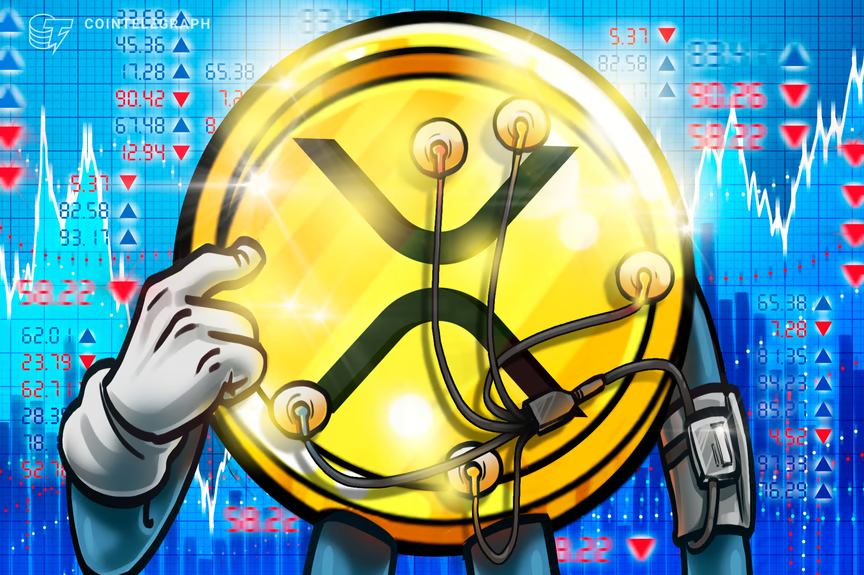
Ripple’s $4 billion plan
What would Ripple get? Access to markets and financingWith the purchase of Hidden Road for about $1.25 billion, Ripple gets the infrastructure used by

What if Bitcoin reaches a price of $1M?
What drove the price in 2025? Bitcoin has already broken boundaries that sounded unrealistic to many. What pushed the price towards new records in

Michael Saylor’s Strategy Continues to Buy Bitcoin
Saylor’s Bitcoin Strategy Michael Saylor has been pushing the idea that corporate reserves can be managed differently for years. Instead of cash and bonds,

How to check a Bitcoin transaction?
Transakcija na Kriptomatu Nakon što izvršite Bitcoin transakciju na Kriptomatu, dobit ćete potvrdu transakcije. Taj listić služi kao dokaz da je transakcija uspješno pokrenuta.

How to check a USDC transaction?
Transaction on Kriptomat Once you have completed a transaction on Kriptomat, you will receive a transaction confirmation. This slip serves as proof that the